

A Prisoner’s Journey Through the Hellships Story
To understand the history of the Hellships, it helps to imagine the journey through the eyes of one prisoner of war.
In early 1942, an American soldier fighting in the Philippines might have believed that his capture would last only a short time. Instead, many prisoners began a journey that stretched across years and thousands of miles.
It began with the surrender of Allied forces on the Bataan Peninsula.
In the desperate months following the Japanese invasion of the Philippines in December 1941, American and Filipino forces fought a determined defensive campaign on Bataan. Cut off from resupply, suffering from disease, hunger, and dwindling ammunition, the defenders endured months of relentless combat under increasingly impossible conditions. By April 1942, the exhausted Allied forces could no longer continue the fight. On 9 April 1942, Major General Edward P. King surrendered the Bataan Peninsula, marking one of the largest capitulations in American military history.
For the tens of thousands of soldiers who laid down their arms that day, the war was far from over. Instead, captivity marked the beginning of an ordeal that few could have imagined. Within hours of the surrender, Japanese forces began organizing the prisoners into long columns and forcing them northward across the hot and dusty roads of Luzon. The march that followed—later known as the Bataan Death March—would become the first step in a long journey through prison camps, transport ships, and labor camps across the Japanese Empire.
To help tell this story, this website follows the journey through the eyes of a composite character, Sgt. William Mercer. Mercer represents the experience shared by thousands of American prisoners who fought in the defense of the Philippines. His story is not that of a single individual, but a carefully constructed narrative drawn from the testimonies and historical records of many prisoners who endured captivity in the Pacific War.
In our story, Mercer is a 24-year-old infantry sergeant from Ohio, serving with the U.S. Army’s 31st Infantry Regiment stationed in the Philippines when war broke out in December 1941. Like many soldiers of the prewar garrison, he had arrived in the islands expecting routine service in a distant outpost of the American military presence in the Pacific. Instead, he found himself fighting in one of the most desperate defensive battles of the early war. After months of combat on Bataan, Mercer was among the thousands who surrendered and began the long ordeal of captivity that would carry him through prison camps, onto the Hellships, and eventually to forced labor in Japan.
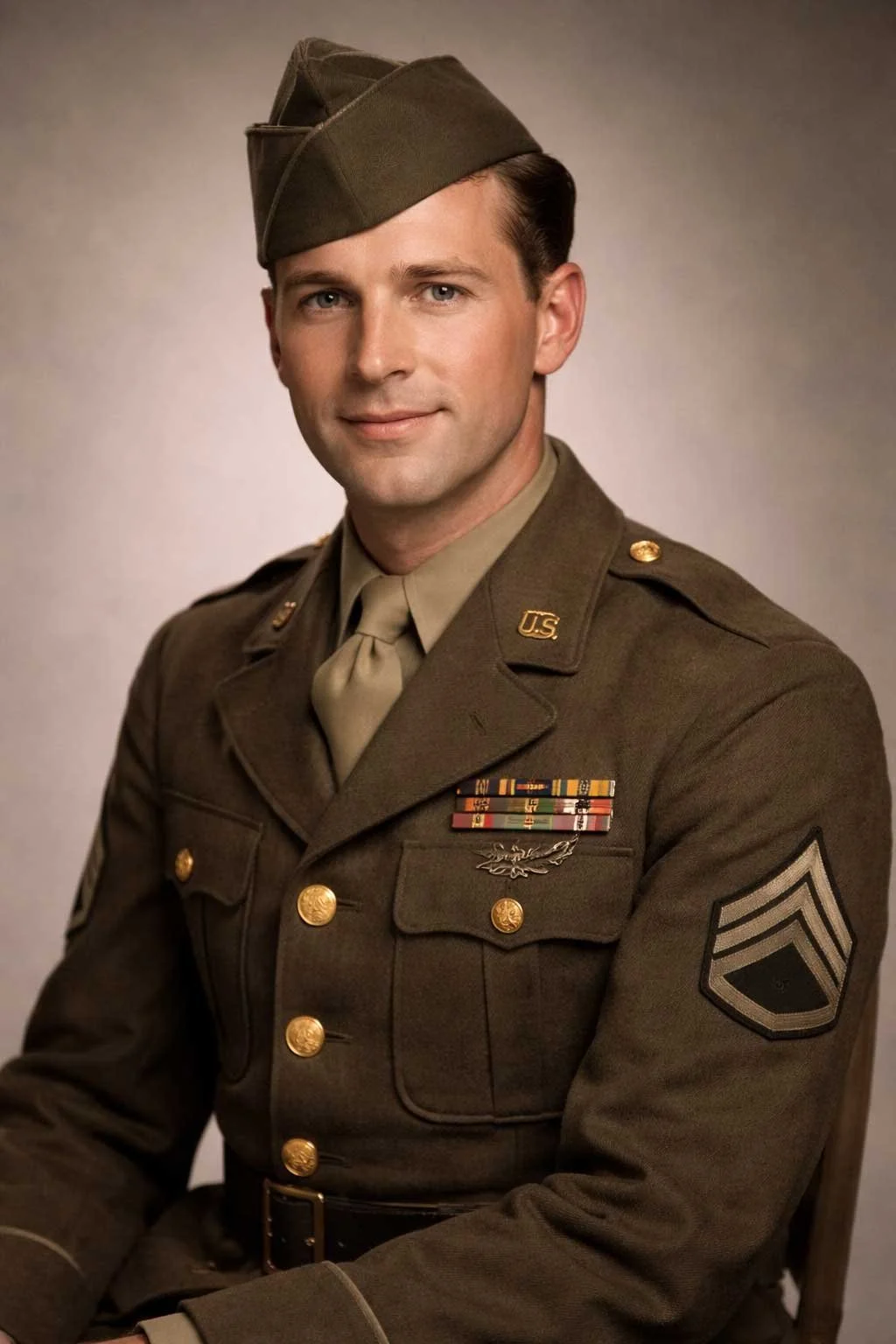
Through Mercer’s journey, we follow the path taken by thousands of Allied prisoners—from the fall of Bataan, through the prison camps of the Philippines, across the deadly Hellship voyages, and finally to the labor camps of the Japanese Empire.