The Beginning of the POW Journey
Bataan Death March
In April 1942, after months of fierce fighting on the Bataan Peninsula in the Philippines, American and Filipino forces were forced to surrender to the advancing Japanese army. Exhausted, malnourished, and out of ammunition, the defenders of Bataan laid down their weapons on April 9, 1942.
What followed was one of the most infamous events of the Pacific War.
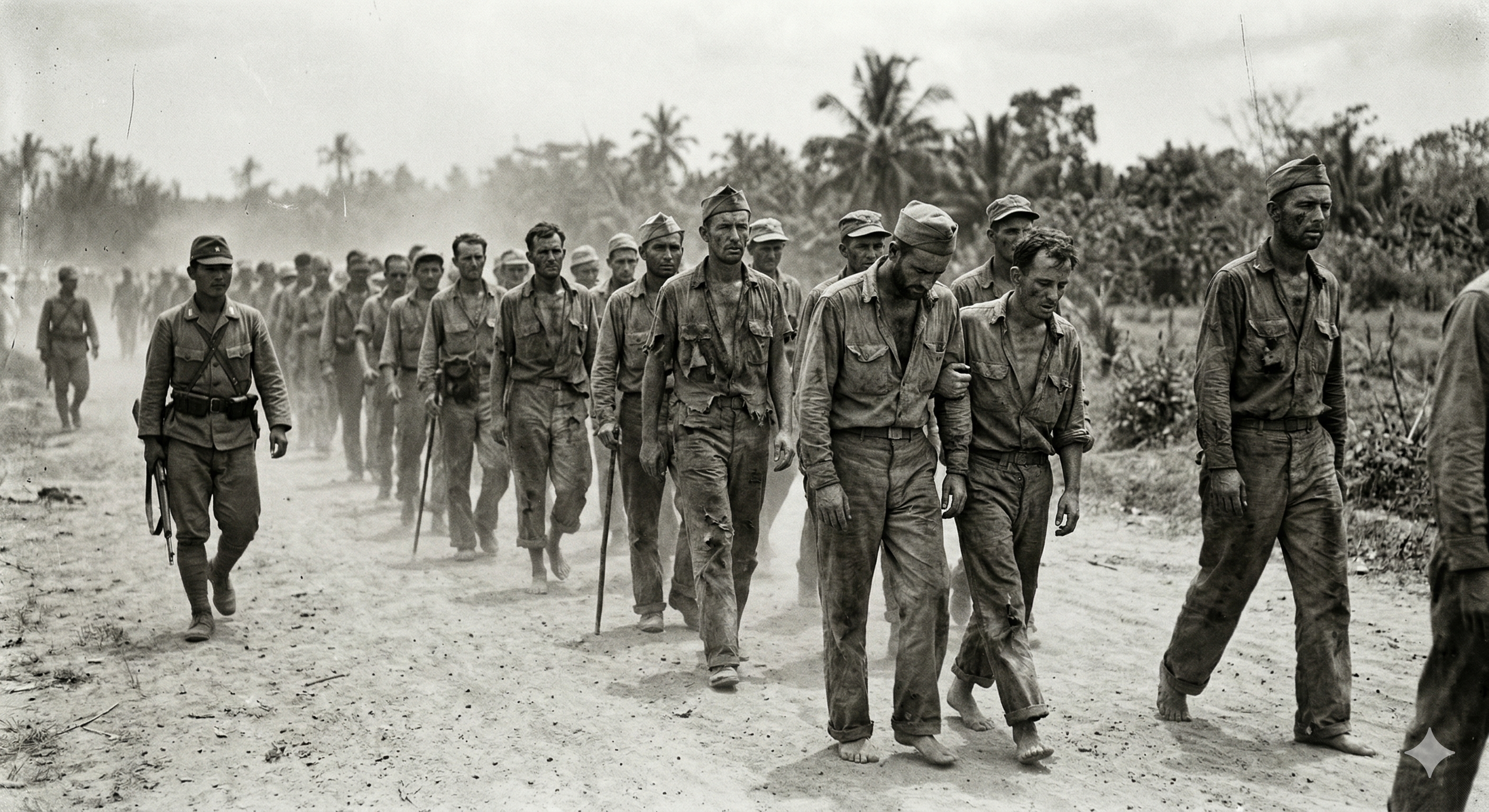
Tens of thousands of prisoners were forced to march north from the southern end of the Bataan Peninsula toward prison camps in central Luzon. The journey, carried out under brutal conditions and with little preparation, became known as the Bataan Death March.
For many prisoners, this march marked the beginning of a long journey through captivity that would eventually lead to prison camps, Hellship transports, and forced labor throughout the Japanese empire.
The Fall of Bataan
The campaign for Bataan had lasted more than three months. Allied forces—largely American and Filipino troops—had been pushed steadily back by the Japanese invasion that began in December 1941.
By April 1942, the situation on the peninsula had become desperate.
Food supplies had nearly disappeared. Disease was widespread. Many soldiers were already weakened by months of starvation and combat.
When Major General Edward King surrendered the remaining forces on Bataan, more than 70,000 soldiers became prisoners of war.
The Japanese army was unprepared to handle such a large number of captives.
The Forced March
Shortly after the surrender, prisoners were ordered to assemble and begin marching north.
The journey covered roughly 65 miles (105 kilometers) from the southern part of Bataan to the town of San Fernando, where the prisoners would be transported further inland.
Conditions during the march were severe.
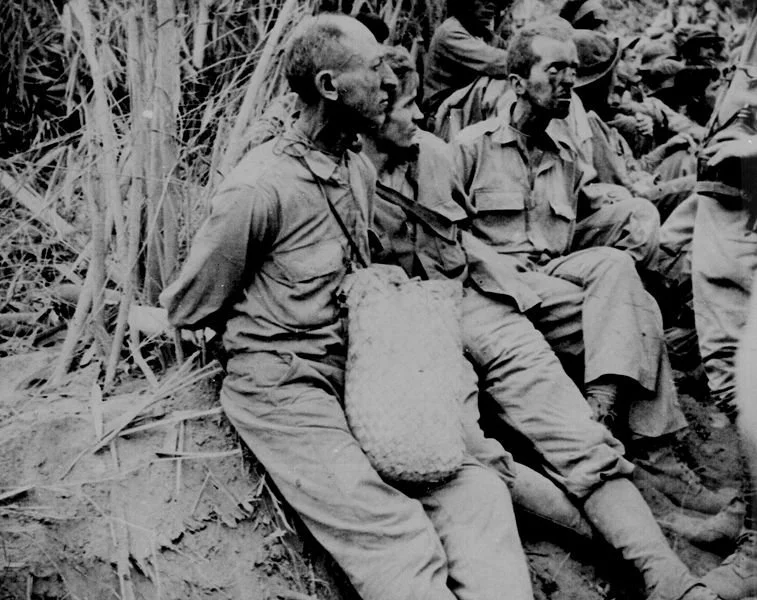
Prisoners were given little food or water. Many were already weakened by disease, wounds, and months of inadequate rations. The tropical heat and dust of the dry season made the journey even more difficult.
Guards often forced the prisoners to march quickly despite their condition.
Those who collapsed from exhaustion or illness frequently received little assistance.
Hardship Along the Route
The march lasted several days for many prisoners.
Along the route, prisoners endured:
extreme heat and dehydration
severe exhaustion and illness
lack of medical care
physical abuse from guards
Many men were unable to keep up with the pace of the march. Others were already weakened from malaria, dysentery, or battle wounds.
Thousands of prisoners died during the journey.
The event later became known as the Bataan Death March, a name that reflected the terrible suffering experienced by the prisoners along the route.
Transport to Central Luzon
After reaching San Fernando, surviving prisoners were crowded into rail cars for transport further north.
The train journey itself was extremely difficult. Prisoners were packed tightly into small freight cars in the intense heat.
From there, the prisoners were taken to prison camps where they would begin the next stage of their captivity.
The largest and most significant of these camps was Cabanatuan.
The Next Stage of Captivity
Cabanatuan Camp in Nueva Ecija became the main holding camp for many of the prisoners captured in the Philippines.
Thousands of survivors of the Bataan Death March were sent there.
At Cabanatuan, prisoners faced years of captivity, disease, and forced labor while awaiting an uncertain future.
For many, the camp would later become the starting point for transport aboard the ships that would become known as Hellships.
The Journey Continues
The Bataan Death March marked the beginning of a long and often tragic path through the Pacific War.
The next chapter in the prisoner journey takes place at the camp where many survivors were held.
Continue the Journey