Oryoku Maru
The First Hellship
In December 1944 hundreds of Allied prisoners of war held at Bilibid Prison in Manila were marched under guard to the docks of Manila Bay. Waiting there was a Japanese cargo vessel that appeared little different from the many merchant ships that passed through the harbor during the war.
The ship was Oryoku Maru.
For the prisoners, the journey aboard this vessel marked the beginning of what would become one of the most infamous chapters of the Hellship story.
Loaded Into the Holds
On 13 December 1944, approximately 1,600 American prisoners of war, most of them survivors of the Bataan campaign and years of captivity in the Philippines, were forced aboard the ship.
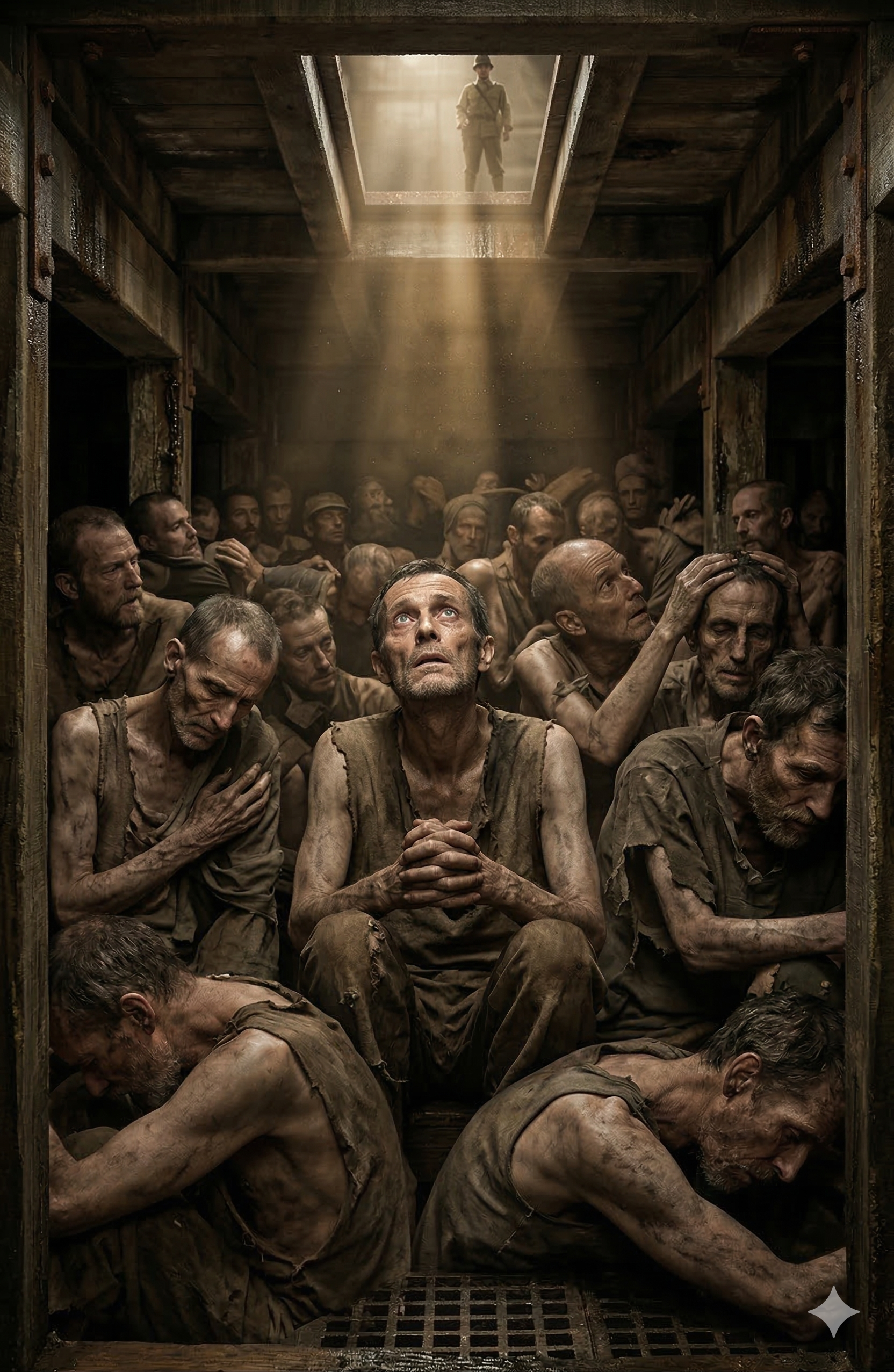
The prisoners were crowded into the cargo holds below deck. The compartments were dark, poorly ventilated, and quickly became suffocating once the hatches were sealed. There was little room to sit, and almost none to lie down.
Food and water were minimal. Sanitary facilities were nearly nonexistent. As the tropical heat built inside the ship’s steel hull, the air in the holds became unbearable.
Men fainted from lack of oxygen. Others struggled desperately for space near small openings where a trace of fresh air could be felt.
For many prisoners, it was their first experience aboard what they would soon call a Hellship.
The Voyage Begins
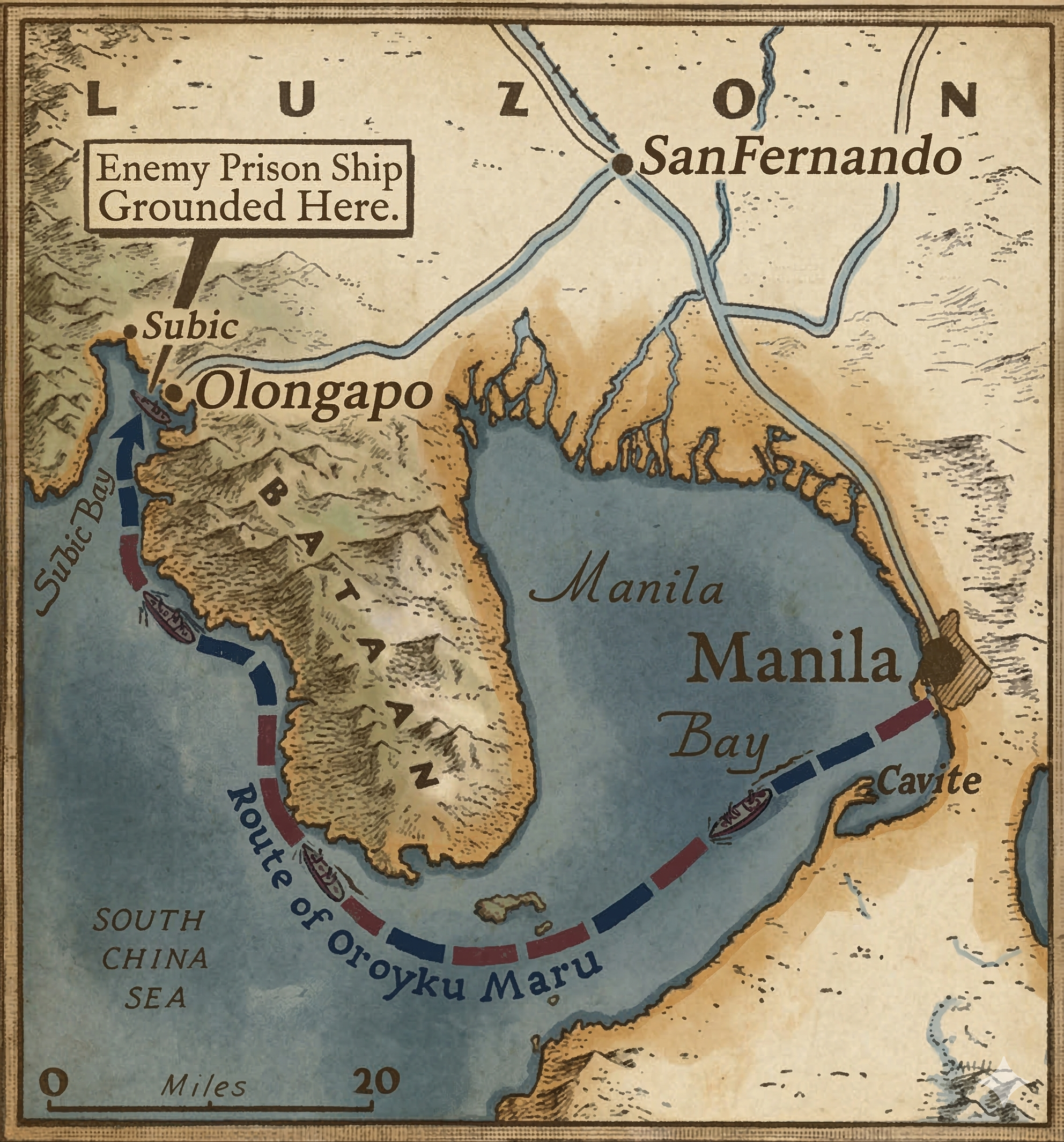
The ship departed Manila Bay bound for Formosa (Taiwan), where the prisoners were to be transferred onward to labor camps in Japan.
But the voyage had barely begun when events took a catastrophic turn.
American aircraft operating in the region had no knowledge that prisoners of war were being transported aboard Japanese cargo vessels. From the air, ships like Oryoku Maru appeared to be ordinary enemy transports.
On 14 December 1944, U.S. Navy aircraft attacked the vessel while it was still in Manila Bay.
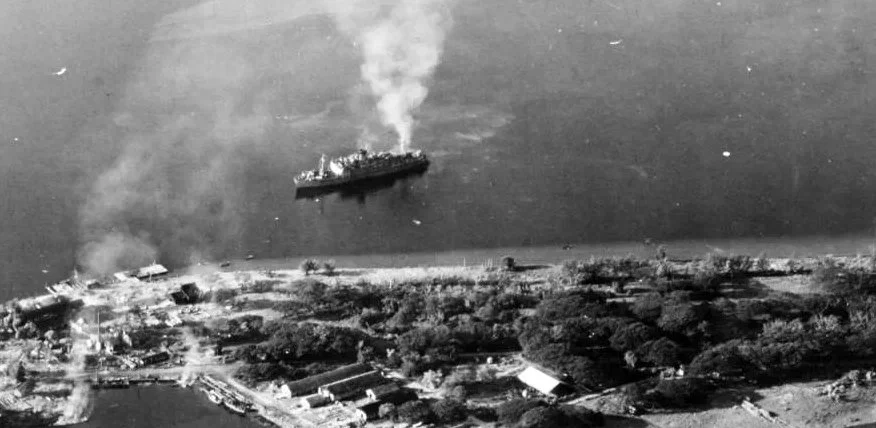
Bombs and strafing runs struck the ship, causing heavy damage and chaos aboard. Below deck, the prisoners trapped in the holds were thrown into panic as explosions rocked the ship and water began entering the compartments.
Some prisoners managed to break open hatch covers or escape through damaged sections of the ship. Others remained trapped below.
The Subic Bay Tragedy
The damaged vessel attempted to escape the harbor and eventually ran aground near Subic Bay on the coast of Luzon.
Over the next two days American aircraft returned repeatedly, attacking the ship and nearby vessels. Prisoners who escaped from the holds swam for shore or clung to floating debris while the attacks continued.
Many were shot by guards as they attempted to escape. Others drowned or were killed during the bombing and strafing.
The attack and subsequent chaos resulted in the deaths of hundreds of prisoners of war.
For the survivors, however, the ordeal was far from over.
Survivors on the Beach
Those who survived the sinking were gathered by Japanese guards along the beaches near Subic Bay. Exhausted, wounded, and still suffering from the conditions inside the ship, the prisoners were held under guard for several days.
Eventually, the survivors were transported north by rail and truck to continue their journey.
Another ship awaited them.
It would carry them onward to Formosa, where the Hellship voyage would continue aboard another vessel: Enoura Maru.
Mercer Survives
Sgt. William Mercer had survived the years of imprisonment in the Philippines and now the attack on Oryoku Maru. Like many others, he escaped from the suffocating hold during the bombing and reached the shore after the ship was abandoned.
Standing on the beach near Subic Bay, Mercer looked back toward the burning wreck of the ship.
The ordeal aboard Oryoku Maru had already taken many lives.
Yet the survivors were about to discover that the journey aboard the Hellships was not over.
Continue the Journey
➡ Next Stop in the Journey: Enoura Maru