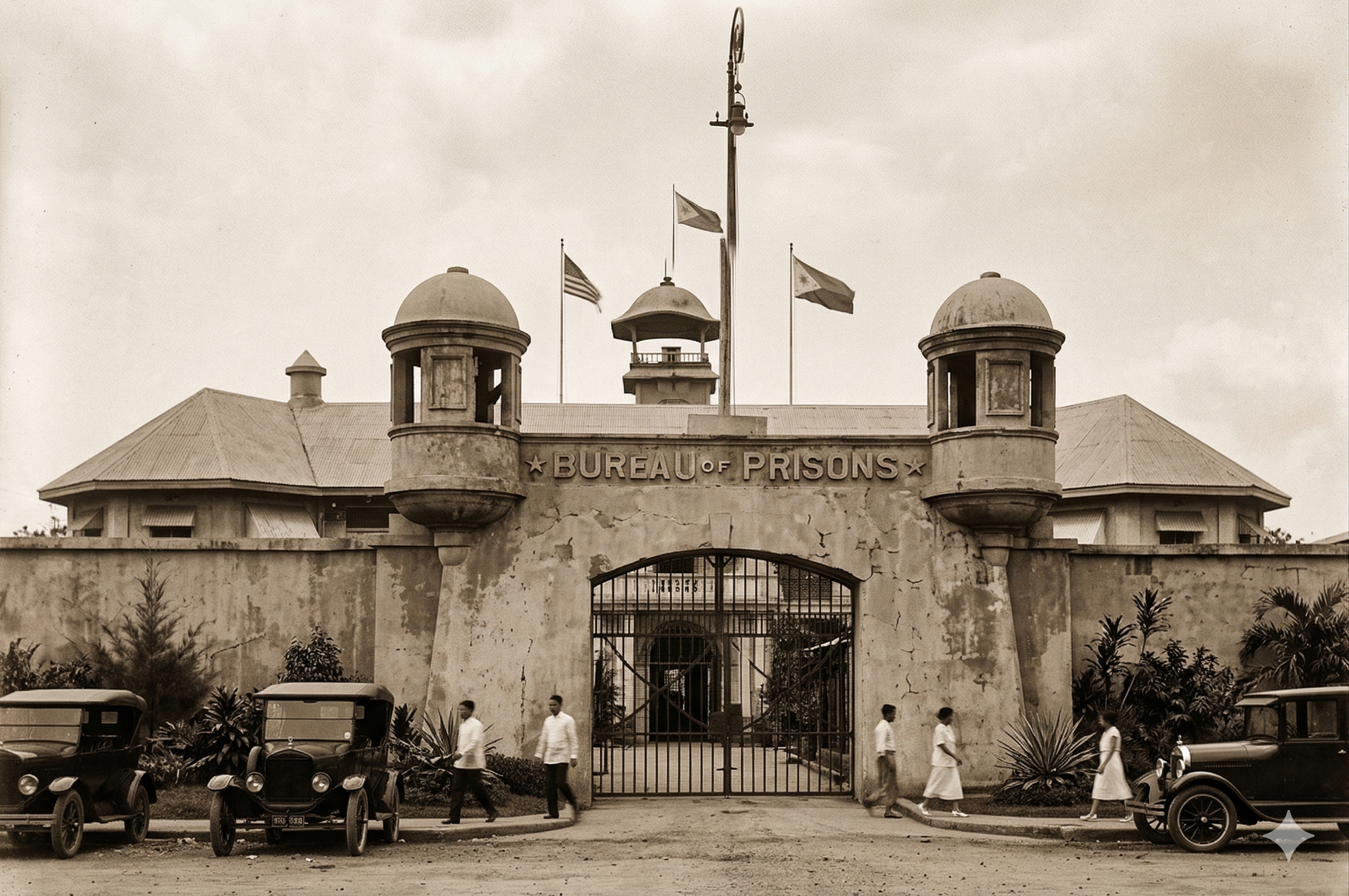
Bilibid Prison
The Gathering Point in Manila
After years of imprisonment at camps such as Cabanatuan, many Allied prisoners of war were eventually transferred to Bilibid Prison in Manila. By 1944 the Japanese military had begun concentrating prisoners there in preparation for transport to labor camps throughout the Japanese Empire.
Originally built by the Spanish colonial government in the nineteenth century, Bilibid Prison stood in the heart of Manila. Its high walls and stone buildings had long been used as a detention facility, but during the war it became a major holding point for Allied prisoners of war awaiting shipment out of the Philippines.
For many prisoners the transfer to Bilibid came unexpectedly. After surviving years of hardship in camps like Cabanatuan, they suddenly found themselves moved to the capital city, uncertain of what would happen next.
A Temporary Holding Camp
Compared to earlier camps, conditions at Bilibid were in some respects less severe. Prisoners were housed in large stone buildings rather than bamboo barracks, and the camp was located within a major city where limited supplies sometimes filtered in through relief organizations.
Yet Bilibid was never meant to be a permanent camp. It served primarily as a transit center.
Prisoners arrived from camps across the Philippines and were assembled in large groups. Japanese authorities began organizing transport ships that would carry these prisoners north to Formosa (Taiwan), Korea, and Japan, where they would be forced to work in mines, factories, shipyards, and industrial plants.
Rumors spread quickly through the prison compounds. Some prisoners believed they might be exchanged or released. Others feared that transport out of the Philippines would mean even harsher conditions ahead.
Few could imagine the terrible voyages that awaited them.
Life Inside the Prison Walls
Inside Bilibid, prisoners continued the daily struggle to survive. Food rations remained limited, and disease still stalked the crowded quarters. Yet the atmosphere differed from the remote prison camps of the countryside.
From within the prison walls, prisoners could sometimes hear the sounds of Manila beyond the compound—the traffic of the city, the voices of civilians, and occasionally the distant rumble of Allied air raids.
Those sounds were reminders that the war was moving closer to the Philippines.
Among the prisoners, speculation about their fate grew constant. Lists of names began to circulate as Japanese guards organized transport groups. Each day new details emerged: prisoners would be moved to ships, they would be taken north, they would work in factories or mines.
No one knew how dangerous those voyages would become.
The Beginning of the Hellship Transports
By late 1944 the Japanese began moving prisoners from Bilibid to Manila’s harbor in large groups. From there they were loaded onto cargo vessels—ordinary merchant ships hastily converted to carry hundreds or even thousands of prisoners.
These ships had no markings identifying them as prisoner transports. The prisoners were packed into dark cargo holds with little ventilation and almost no sanitation. Conditions quickly became suffocating.
Survivors would later remember the moment when the hatches closed above them and the ships began to move out of Manila Bay. For many prisoners it marked the beginning of one of the most terrifying experiences of the war.
These ships would soon earn the grim name that history remembers today:
The Hellships.
Mercer’s Next Step
For Sgt. William Mercer, the days at Bilibid were filled with uncertainty. He had endured the Death March and survived years at Cabanatuan. Now he watched as prisoners were called out in groups and marched toward the docks.
One morning his name appeared on the list.
Mercer and hundreds of other prisoners were ordered to prepare for transport. Guarded by Japanese soldiers, they were marched through the streets of Manila toward the harbor.
Waiting there was a Japanese cargo vessel that would soon become infamous in the history of the Hellships.
Its name was Oryoku Maru.
Continue the Journey