


Latest information on WWII Hellships, POW transport ships, survivor testimony, and casualty research.

Cabanatuan prisoner comes home after 84 years
A Bataan Death March survivor who died at Cabanatuan was buried at home in Arkansas this month. Many Cabanatuan survivors were later shipped out on the Oryoku Maru. Eighty-four years after he died as a prisoner of war, Pvt. Delmor Erwin is home.

PRESERVING THE HELLSHIPS MEMORIAL FOR FUTURE GENERATIONS
The two sites differ in important ways, but the Clark experience offers practical lessons on institutional responsibility, government cooperation, maintenance funding, and legal agreements. This report recommends that the Hellships Memorial Foundation (HMF) seek a formal preservation agreement with SBMA that sets out clear responsibilities for the Memorial’s protection, maintenance, restoration, public access, and future development. It also recommends building partnerships with the United States and the other governments whose nationals are commemorated at the Memorial.
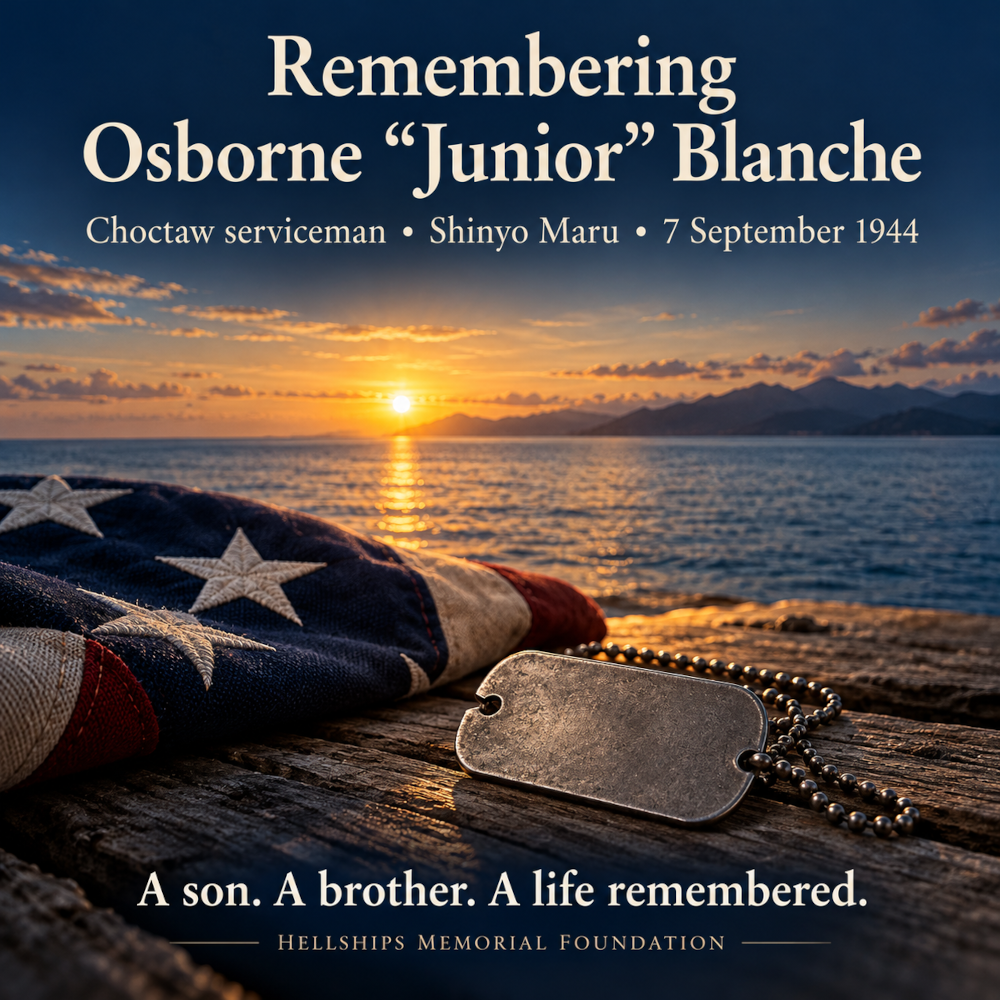
Remembering Osborne “Junior” Blanche: A Choctaw Life Lost on the Shinyo Maru
An account written by his nephew, Jerry D. Blanche, Ph.D., preserves the memory of a Choctaw serviceman who endured captivity in the Philippines and died in the Shinyo Maru tragedy.

An Enoura Maru Victim is finally Coming home
One of the men who survived the Oryoku Maru, then died on the Enoura Maru, will be buried with full military honors on October 24.
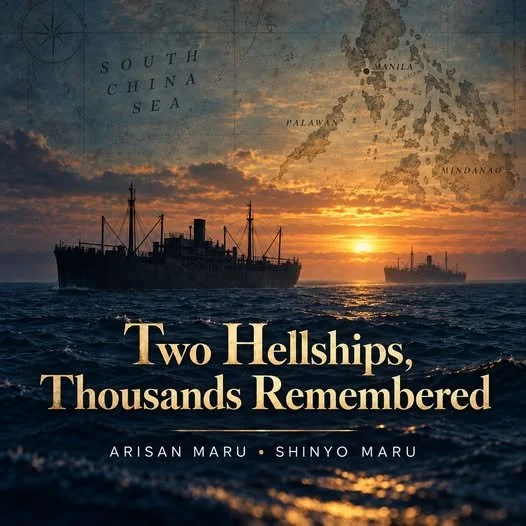
Two Hellships, Thousands Remembered
82 years ago this Sunday, on October 11, 1944, about 1,781 American POWs were loaded into the holds of the Arisan Maru in Manila. The ship hid off Palawan for days during air raids, went back to Manila, and joined a convoy north on October 21.
On October 24 she was torpedoed in the South China Sea. Only nine men survived, so the Arisan Maru remains the deadliest single loss of American POWs at sea.
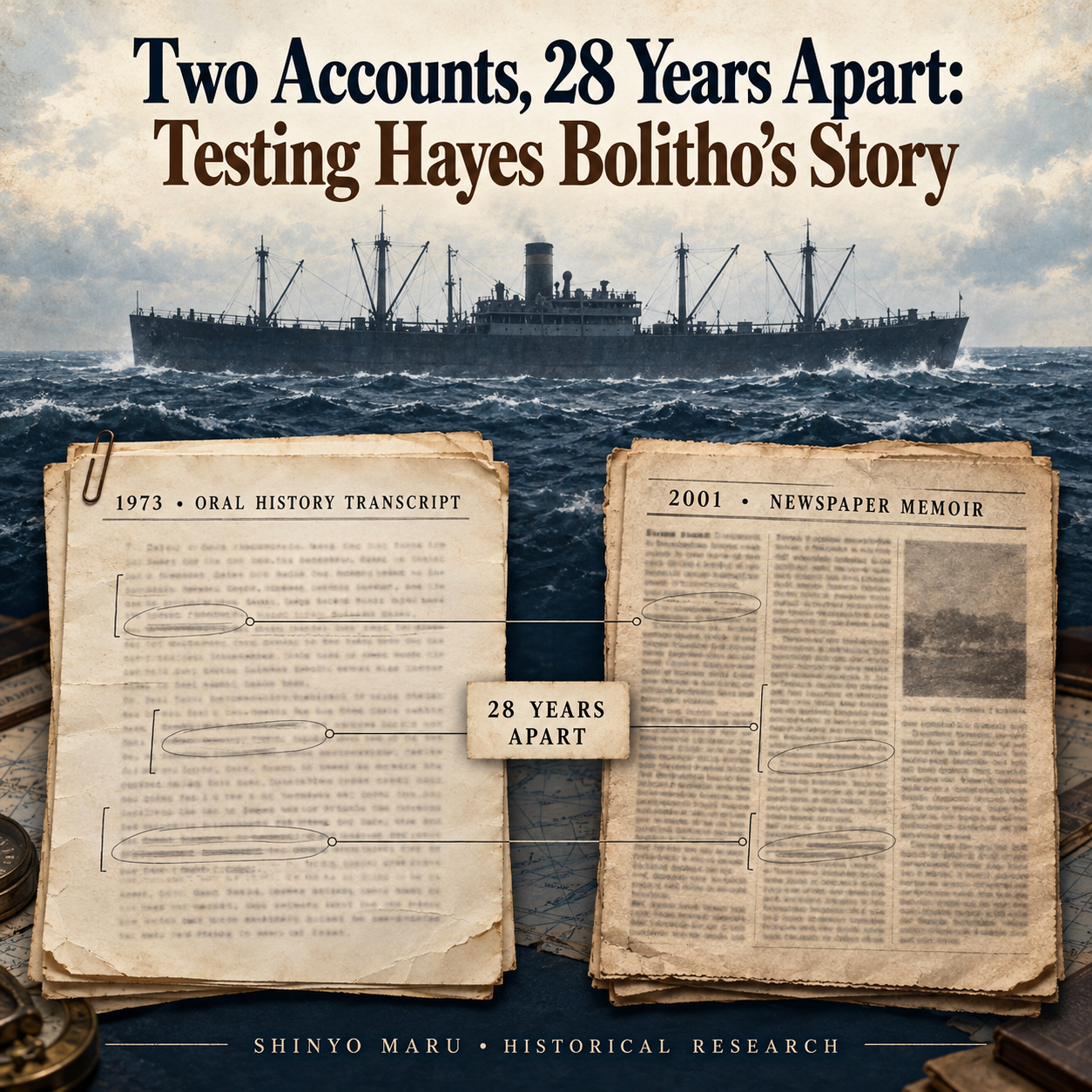
Two Accounts, 28 Years Apart: Testing Hayes Bolitho's Story
Hayes Bolitho survived the sinking of the Shinyo Maru on September 7, 1944. He told his story twice, 28 years apart, and we compared the two accounts line by line.
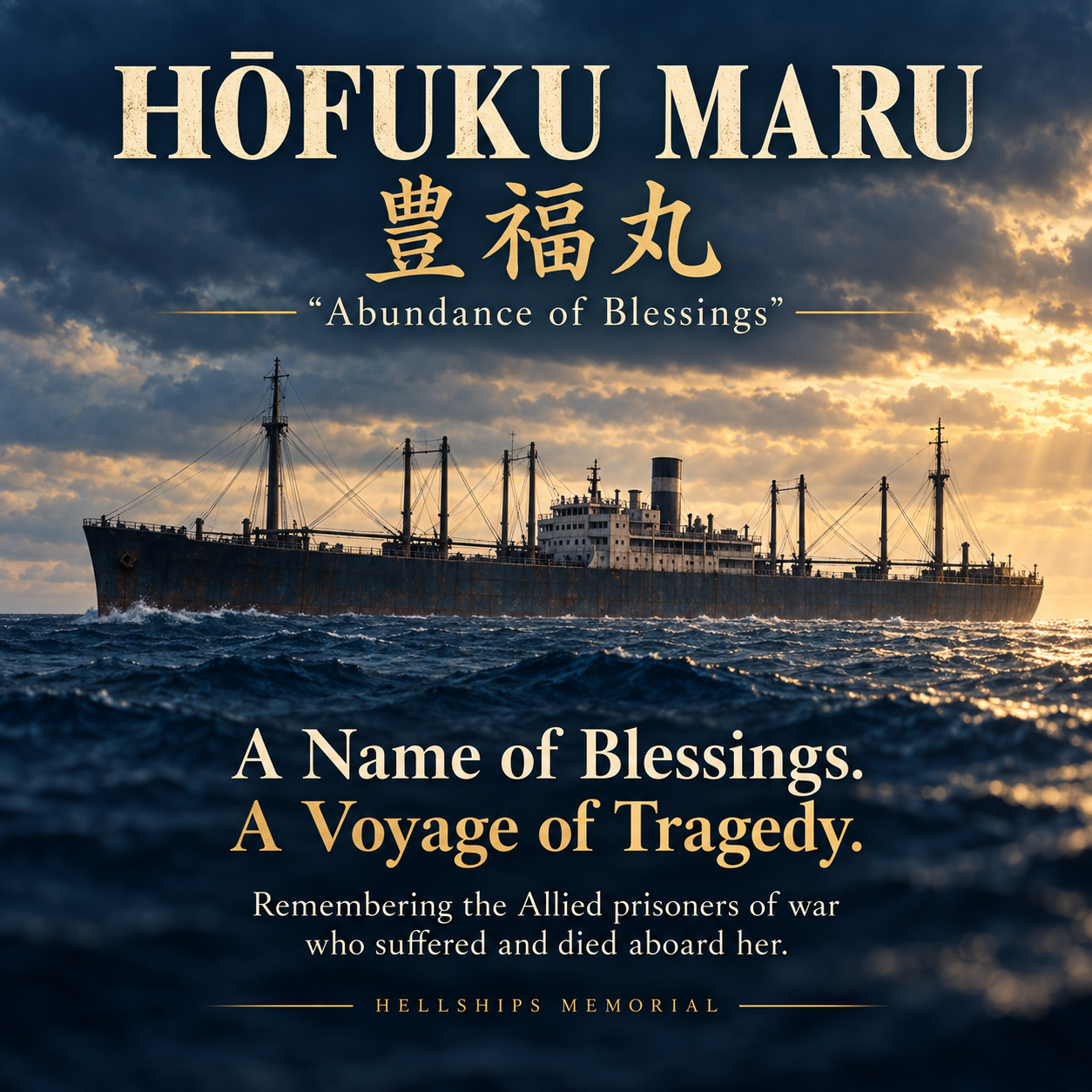
Did you know that the name Hōfuku Maru carries a tragic historical irony?
Translated from its Japanese kanji (豊福丸), Hōfuku roughly means "Abundance of Blessings" or "Repayment of Good Fortune". For a vessel that became an unmarked floating grave for over 1,000 Allied prisoners of war, the name stands as a haunting contradiction in maritime history.
Free Detailed Report: The Final Resting Place of the Hofuku Maru
The Hellships Memorial Foundation report, The Final Resting Place of the Hofuku Maru: A Comprehensive Historical and Forensic Report, is now available for free download on the Hellships Memorial Foundation website.
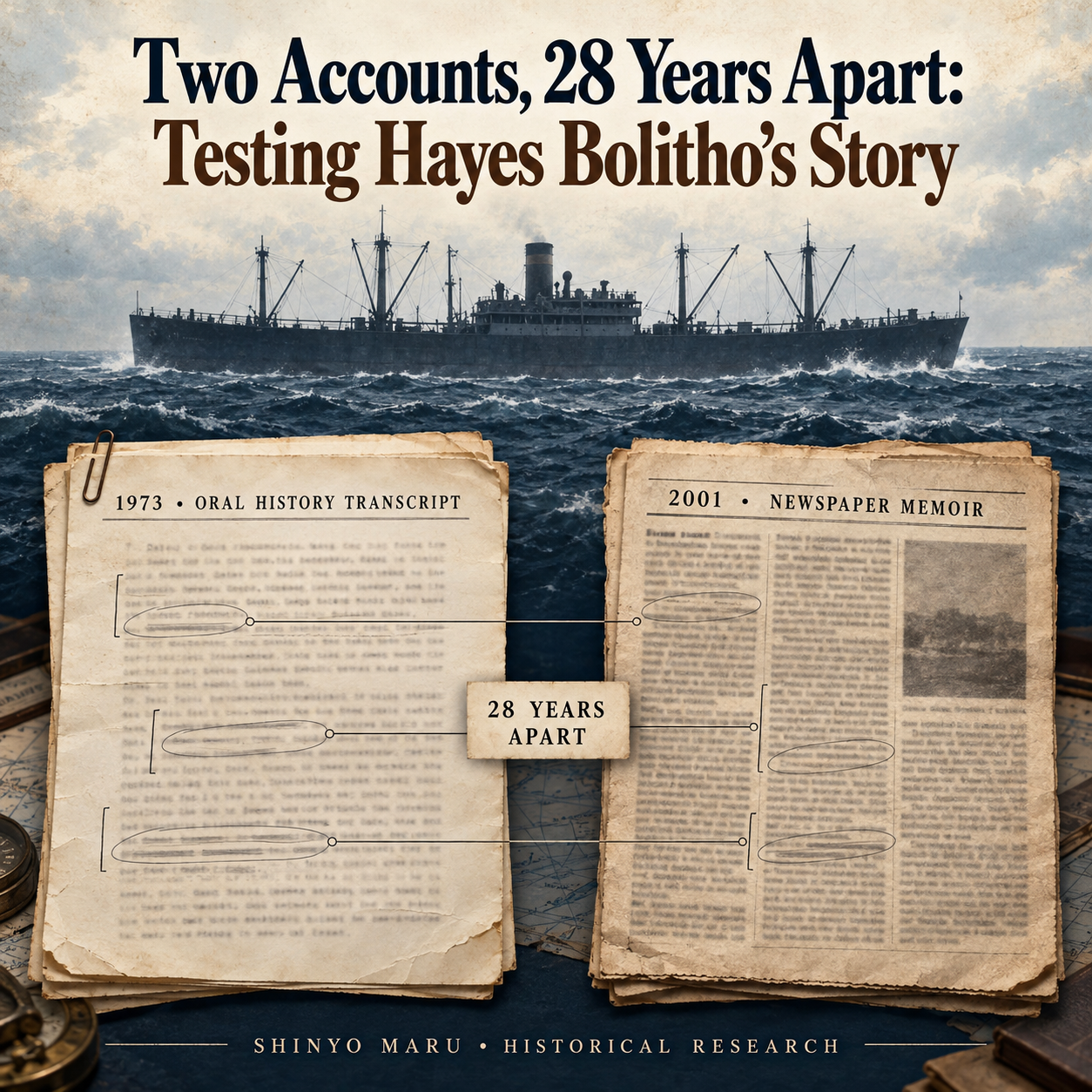
Testing a Survivor's Story Against Itself
Bolitho told his story twice: in a 1973 oral history interview with the University of North Texas, and in a memoir he wrote in 2001, later serialized in eight newspaper installments. We recovered every installment, including one missing from the web archive, and transcribed all 124 pages of the interview. Then we read the two side by side.

The Hell Ships: Expanding the History Beyond Allied Prisoners of War
A recent article published by The Indo Project, titled The Hell Ships, presents a broad introduction to the Japanese prisoner and forced-labor transport system of the Second World War. Its most important contribution is its insistence that the history of the hellships cannot be understood solely through the experiences of Allied prisoners of war.

New Research Opens Another Chapter in the Shin’yō Maru Project
Sergeant Martin Eisenman survived the fall of Bataan, the Death March and more than two years as a prisoner of war. He died aboard Shin’yō Maru on 7 September 1944, one of 667 American POWs killed when the ship was torpedoed off Sindangan Point, Mindanao.
Historian Lowell Silverman has written a detailed biography of Eisenman for Delaware’s World War II Fallen. The Hellships Memorial Foundation (HMF) has compared it with our own research for the Shin’yō Maru Project. The article does not tell us where the wreck lies. It does give us something just as useful: a clear trail of records to follow, and several new questions worth answering.

Voyages of Infamy: Survivor Voices from the Japanese Hellships
The National Museum of the Pacific War has made available an important historical recording titled Voyages of Infamy: The Hellship Experience. Recorded during a museum symposium on November 11, 2000, the two-hour video preserves firsthand testimony and historical commentary concerning the brutal transport of Allied prisoners of war aboard Japanese merchant vessels during World War II.

The July 2026 Hellships Memorial Foundation Newsletter Is Here!
We are pleased to announce the publication of the July 2026 edition of the Hellships Memorial Foundation Newsletter—our first quarterly issue and an important milestone as we continue our mission to honor those who suffered aboard the Japanese Hellships during World War II.


A Marine's Unimaginable Journey: Remembering Gunnery Sergeant John T. White
A Marine's Unimaginable Journey: Remembering Gunnery Sergeant John T. White
Gunnery Sergeant John T. White survived things that would have broken most men. The thing that killed him was friendly fire.

The Rakuyō Maru Tragedy
In the vast expanse of the Pacific Ocean lies one of the most heartbreaking and complex stories of World War II. It is the story of the Japanese Hellship Rakuyō Maru, a tragedy defined by immense suffering and a miraculous submarine rescue.

Still Entombed: A News Review of the Hunt for America's WWII Hell Ship Dead
Eight decades after American bombs unknowingly sent over 1,600 Allied prisoners to the bottom of Subic Bay, the Pentagon has launched one of its largest-ever underwater recovery operations to bring some of them home.

Painting the Hell Ships: The Left-Handed Legacy of Kihachiro Ueda
Vivid, detailed depictions of thes Hellships—survives thanks to the extraordinary dedication and tragic personal history of a single Japanese naval artist: Kihachiro Ueda (上田毅八郎). His left-handed legacy stands as a poignant intersection of military history, personal trauma, and artistic resilience.

Intelligence or Ignorance? The Debate Over WWII's Deadliest Friendly Fire
During the brutal expanse of the Pacific War, one of the most harrowing paradoxes emerged: the greatest cause of death for Allied prisoners of war at sea was not direct Japanese execution or disease, but rather the bombs and torpedoes of their own military forces.

Justice for the Oryoku Maru: The San Fernando Murders and War Crimes Trials
The harrowing events surrounding Oryoku Maru culminated in a postwar quest for justice, leading to the Yokohama war crimes trials where the perpetrators of the infamous San Fernando murders finally faced judgment.