Arisan Maru
Japanese POW Transport Ship Sunk in 1944
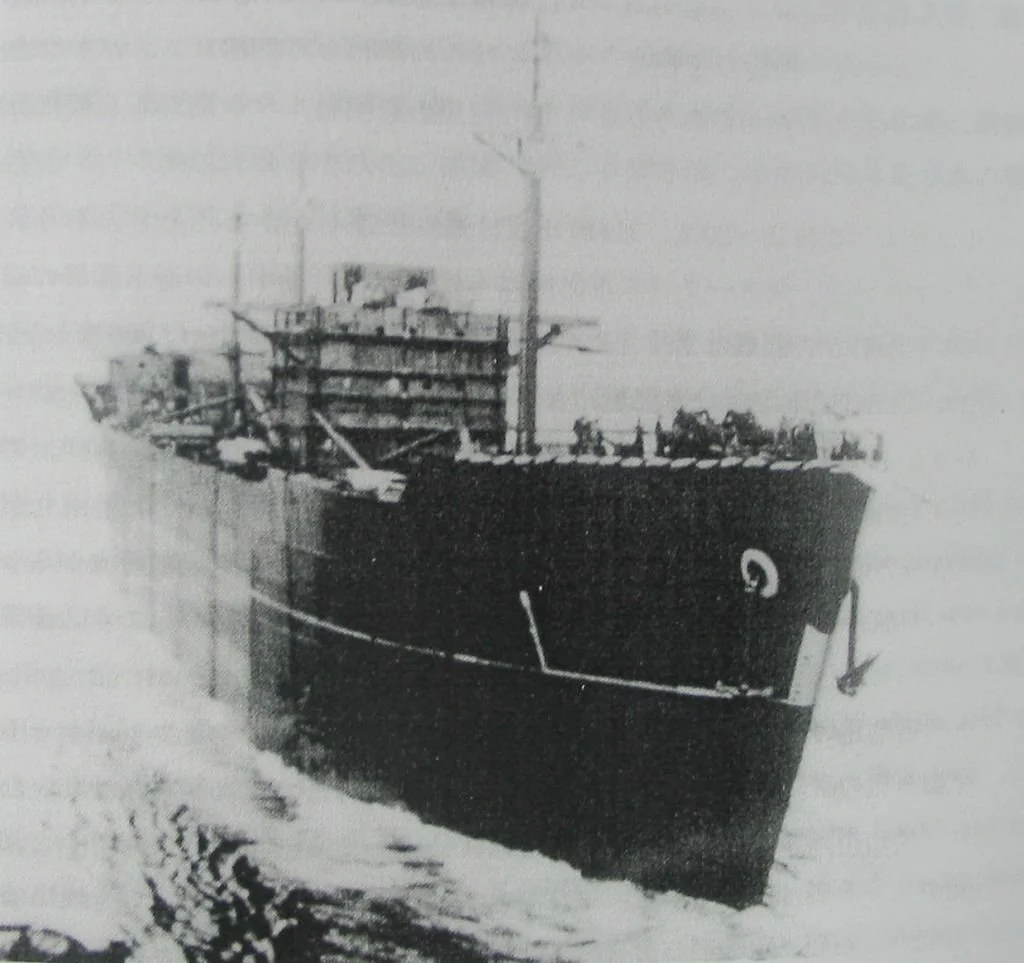
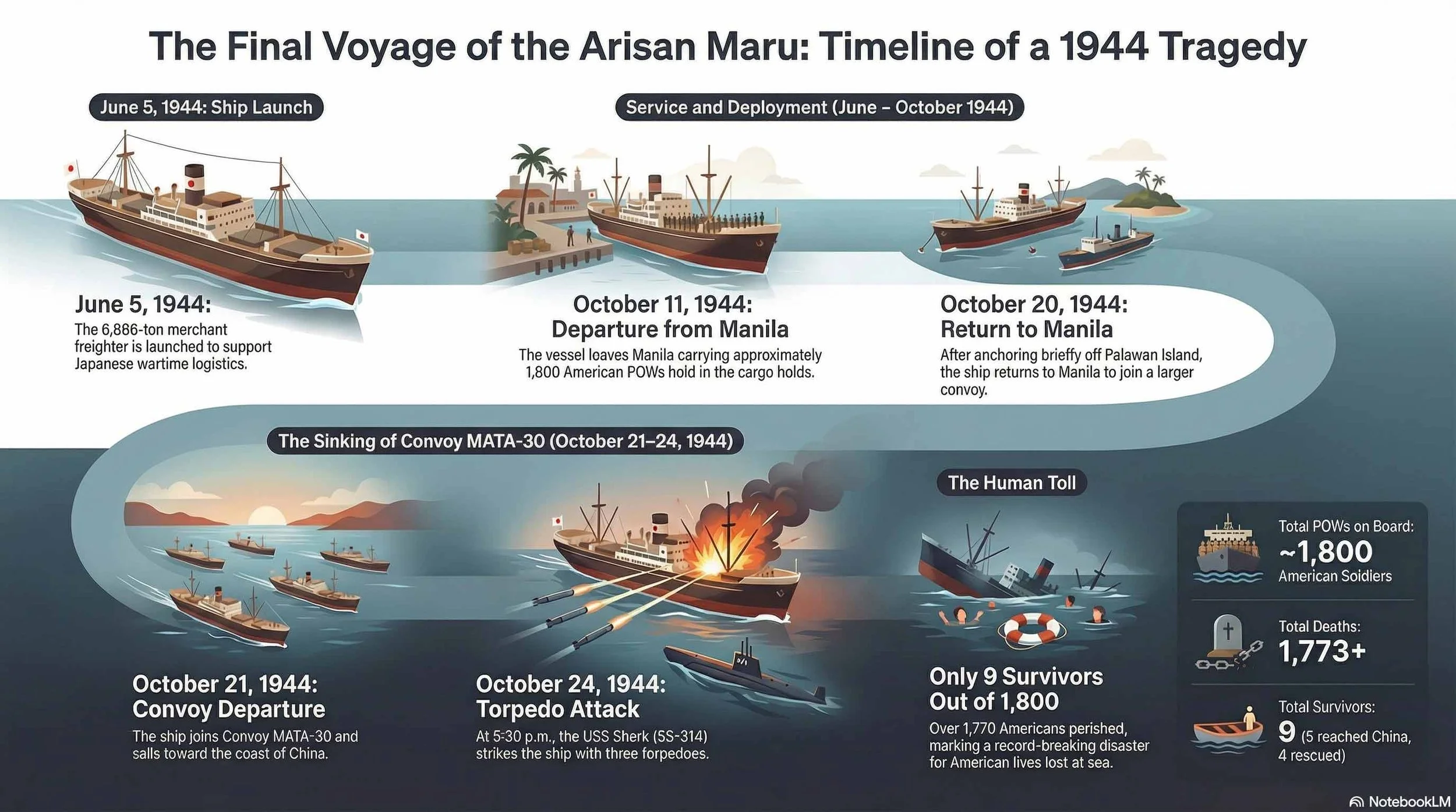
In 1944, Arisan Maru became the site of one of the greatest single losses of American life at sea during World War II. A Japanese freighter used as a POW transport, it sailed from Manila in October 1944 carrying about 1,782 to 1,783 American prisoners of war, most of them survivors of Bataan, Corregidor, and years of imprisonment in the Philippines. On 24 October 1944, while in convoy in the East China Sea en route toward Formosa, the unmarked ship was torpedoed and sank. Almost all of the prisoners aboard were lost. Public historical summaries consistently state that only nine POWs survived, making Arisan Maru one of the deadliest and most tragic of all the Hellships.
Key facts
Type: Japanese transport ship (cargo vessel, WWII)
Sunk: October 24, 1944
Location: Southwest of Formosa (Bashi Channel)
POWs aboard: Approx. 1,781
Survivors: 9
Ship Name Variations
Historical records may refer to this ship using several naming conventions:
• Arisan Maru
• SS Arisan Maru
• Arisan-Maru
• Japanese transport Arisan Maru
These variations appear in wartime documents, naval reports, and historical publications.
The Ship
Arisan Maru was a Japanese freighter employed during the war as part of Japan’s military transport system. By late 1944 it had been assigned to move American POWs out of the Philippines as Allied forces advanced back into the archipelago. Like other Hellships, the vessel was not marked to indicate that prisoners of war were aboard, even though it was moving through waters heavily patrolled by Allied submarines. This failure to mark the ship placed the prisoners directly in the path of anti-shipping warfare.
The Voyage
According to the U.S. National Archives, Arisan Maru was part of a convoy that departed Manila for Takao, Formosa, on 21 October 1944, carrying 1,783 American POWs. The prisoners had already endured years of brutal captivity and were compressed into the holds under appalling conditions. NARA’s account notes that men were packed so tightly there was only standing room in one hold, and that some were later shifted into another hold partly filled with coal. Water was grossly inadequate, and several prisoners died even before the sinking from heat exhaustion and the harsh conditions aboard.
The Attack or Loss
On 24 October 1944, Arisan Maru was torpedoed while in the East China Sea. Because the ship was unmarked, the attacking American submarine had no way of knowing that Allied prisoners were aboard. Japanese escorts rescued Japanese personnel but did not rescue the American POWs in the water. Some prisoners managed to leave the sinking ship, but most were abandoned at sea. The POW Research Network states that out of 1,782 POWs, only nine survived the disaster. DPAA casualty profiles for men lost on Arisan Maru also describe the incident as one in which only nine POWs survived while the remainder were lost at sea.
Casualties and Survivors
The broad casualty picture is tragically clear even though some source totals differ slightly. NARA gives a figure of 1,783 POWs aboard, while the POW Research Network gives 1,782; both agree that only nine survived. That means approximately 1,773 to 1,774 American POWs were lost in the sinking and its aftermath. This makes Arisan Maru one of the worst maritime disasters in American military history and the single greatest loss of American POW lives at sea in the Pacific War. DPAA casualty listings continue to identify Arisan Maru losses as non-recoverable cases tied to the East China Sea on 24 October 1944.
Legacy and Memorialization
Arisan Maru holds a central place in the history of the Hellships because it represents the extreme human cost of transporting POWs in unmarked ships through active war zones. For many American families, the ship became a symbol of disappearance and unresolved grief, since so few survived to describe what happened. Today, Arisan Maru is remembered through POW memorial research, descendant work, archival recovery, and the broader effort to document the names and fate of the men aboard. Its story also remains significant in ongoing accounting and commemoration work, including DPAA case files and the wider memorial landscape honoring American prisoners lost in Japanese captivity.
Frequently Asked Questions About Arisan Maru
What was the Arisan Maru?
Arisan Maru was a Japanese cargo ship used during World War II to transport Allied prisoners of war from the Philippines to Japan. The vessel was part of the Japanese POW transport system later known as the “Hellships.”
When was Arisan Maru sunk?
The ship was sunk on 24 October 1944 in the Philippine Sea after being torpedoed by a U.S. submarine while carrying approximately 1,800 American prisoners of war.
How many prisoners died on the Arisan Maru?
Nearly 1,800 American prisoners of war were lost, making the sinking of Arisan Maru the largest maritime loss of U.S. military personnel during World War II.
Why were Hellships attacked by Allied forces?
The ships were not marked as carrying prisoners of war, so Allied submarines and aircraft believed they were ordinary Japanese cargo vessels.
Sources
U.S. National Archives, “American POWs on Japanese Ships Take a Voyage into Hell”
POW Research Network Japan, Arisan Maru
Defense POW/MIA Accounting Agency casualty profiles and non-recoverable listings tied to Arisan Maru
Bataan Project, Arisan Maru research entries and individual case histories
Related pages
Oryoku Maru
Enoura Maru
Brazil Maru
The Philippine Hellship Convoys
Hellships Casualty Database
Hellships Survivor Records
Hellships Research Center
Hellships Researcher Guide